Every sophisticated player understands that casino gaming is fundamentally a numbers game. Behind the elegant atmosphere, the refined service, and the excitement of each hand or spin lies a mathematical framework that governs every outcome. At EldergroveRetreat, we believe that educated players enjoy a richer, more fulfilling gaming experience—one based on informed decisions rather than blind hope.
Understanding odds doesn't diminish the thrill of gaming; rather, it enhances your appreciation of the games while helping you make strategic choices aligned with your entertainment goals and budget. This comprehensive guide demystifies the mathematics behind popular casino games, explaining house edge, probability, and strategic considerations that every player should understand.
The Foundation: House Edge Explained
Every casino game incorporates a mathematical advantage for the house, known appropriately as the "house edge." This percentage represents the average profit the casino expects to make from each bet over the long term. Understanding house edge is crucial because it directly impacts your expected returns and helps you choose games that align with your playing style and objectives.
The house edge varies significantly across different games and even across different bets within the same game. For example, certain bets at the craps table carry a house edge of less than 1.5%, while others on the same table exceed 10%. Knowing these distinctions allows you to maximize your playing time and entertainment value.
It's essential to understand that house edge operates over thousands or millions of hands, spins, or rolls. In the short term—which encompasses most individual gaming sessions—variance plays a significant role. You might win substantially despite the house edge, or you might lose more quickly than the edge would predict. The house edge is a long-term mathematical expectation, not a guarantee of results in any particular session.
Smart players use house edge information to select games and specific bets that offer the best odds. This doesn't guarantee winning, but it does ensure you're getting maximum value for your gaming budget. At EldergroveRetreat, our gaming staff are always happy to explain the odds of any game or bet, helping you make informed choices.
Blackjack: The Strategic Card Game
Blackjack stands out among casino games for offering one of the lowest house edges—when played with proper basic strategy. The game's appeal lies in this strategic element: your decisions directly impact your expected return. Under optimal conditions with player-friendly rules, the house edge in blackjack can be reduced to approximately 0.5% or even lower.
Basic strategy in blackjack isn't intuitive; it's a mathematically derived set of plays for every possible hand combination. This strategy accounts for your cards, the dealer's upcard, and the specific rules of the table you're playing. Deviating from basic strategy, even with what seems like logical reasoning, increases the house edge against you.
Several factors influence blackjack odds beyond basic strategy. The number of decks in play affects probabilities—single-deck games generally favor the player more than six or eight-deck shoes. Rules variations also matter significantly. Games where the dealer stands on soft 17, where you can double down on any two cards, or where blackjacks pay 3:2 rather than 6:5 all favor the player.
Card counting, the practice of tracking the ratio of high to low cards remaining in the shoe, can theoretically shift the edge in the player's favor. However, this requires significant skill, concentration, and practice. Moreover, casinos actively discourage counting through various countermeasures. For most players, mastering basic strategy provides sufficient foundation for enjoyable, strategic play.
Roulette: Understanding the Wheel
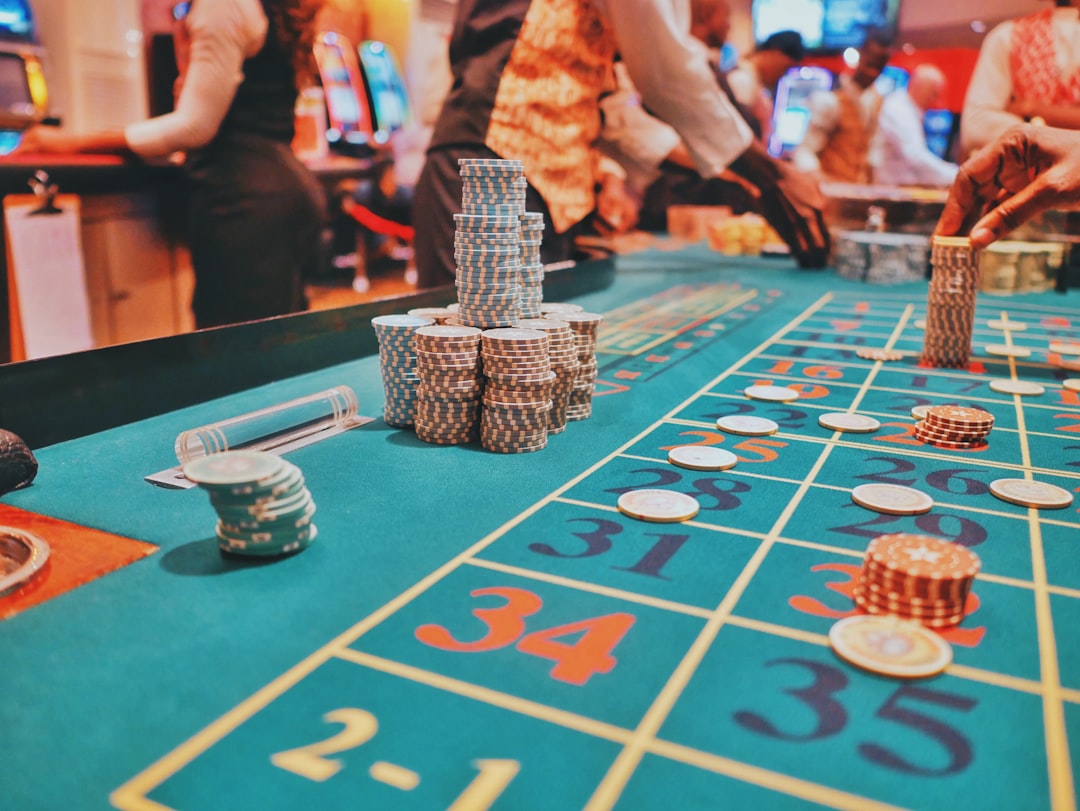
Roulette embodies elegant simplicity—a spinning wheel, a bouncing ball, and numerous betting options. However, this simplicity can mask important distinctions that significantly affect your odds. The most crucial factor is whether you're playing European or American roulette.
European roulette features 37 pockets: numbers 1-36 plus a single zero. This configuration gives the house an edge of 2.7% on most bets. American roulette adds a double zero pocket, creating 38 total pockets and increasing the house edge to 5.26%. This seemingly small difference nearly doubles the casino's advantage, making European roulette substantially more favorable for players.
Many players believe that certain bets at roulette offer better odds than others. In reality, almost all bets on a European roulette table carry the same 2.7% house edge, whether you're betting on a single number, red or black, or any other combination. The odds of winning vary—single number bets win less frequently but pay more when they hit—but the house edge remains constant.
Some European roulette tables offer additional rules like "La Partage" or "En Prison," which return half your stake or allow you to "imprison" your bet for another spin when the ball lands on zero. These rules reduce the house edge to approximately 1.35% on even-money bets, making them among the most favorable odds in the casino for games of pure chance.
Baccarat: The High Roller's Choice
Baccarat enjoys tremendous popularity among high-stakes players, partly due to its favorable odds and partly due to its association with sophistication and elegance. The game offers three primary bets: Player, Banker, and Tie. Understanding the odds of each is essential for strategic play.
The Banker bet carries a house edge of approximately 1.06%, making it one of the best bets in the casino. The casino typically charges a 5% commission on winning Banker bets, which is how they maintain their edge despite the Banker's slight statistical advantage. The Player bet, with a house edge around 1.24%, is nearly as favorable and requires no commission.
The Tie bet, despite its attractive 8:1 payout, carries a substantial house edge of over 14%. This makes it one of the poorest bets on the casino floor from an odds perspective. Experienced baccarat players generally avoid tie bets, focusing their action on Banker and Player bets instead.
Baccarat is essentially a game of chance—no playing decisions affect the outcome beyond choosing which bet to make. The cards are dealt according to fixed rules, eliminating the strategic element present in blackjack. This simplicity appeals to many players who enjoy the game's pace and social atmosphere without the need to memorize complex strategies.
Craps: Navigating the Complex Table
The craps table can appear intimidating to newcomers, with its complex layout and numerous betting options. However, beneath this complexity lie some of the casino's best odds alongside some of its worst. Knowledge is truly power at the craps table.
The Pass Line and Don't Pass bets form the foundation of craps and offer relatively favorable odds with house edges of 1.41% and 1.36% respectively. What makes these bets particularly attractive is the ability to take or lay odds—additional bets made after a point is established that pay true odds with no house edge whatsoever. By maximizing your odds bets, you can reduce the overall house edge on your combined wager to well under 1%.
Conversely, proposition bets in the center of the craps table carry house edges ranging from 9% to over 16%. These bets—including Any 7, Hard Ways, and various one-roll propositions—offer exciting payouts but represent poor value from an odds perspective. The dramatic calls from the stickman promoting these bets add to the table's energy, but disciplined players focus their action on the better odds found along the table's perimeter.
Understanding craps odds transforms the game from overwhelming to strategic. Stick with Pass/Don't Pass and Come/Don't Come bets, maximize your odds, and you'll be playing some of the best odds the casino offers while participating in one of its most social and exciting games.
Slot Machines: Understanding RTP
Modern slot machines operate on complex random number generators, with odds determined by the game's programming. The key metric for slot players is Return to Player (RTP), which represents the percentage of all wagered money that a machine will pay back to players over time. An RTP of 96% indicates a 4% house edge.
RTP varies widely across different slot machines, typically ranging from 85% to 98%. Higher denomination machines generally offer better RTP than penny slots. Progressive jackpot slots often have lower base RTPs because a portion of each bet contributes to the growing jackpot pool. Unfortunately, RTP information isn't always readily visible on machines, though some jurisdictions require disclosure.
Unlike table games where strategy can influence outcomes, slot machines are games of pure chance. No skill, timing, or pattern recognition affects results. The random number generator produces outcomes continuously, and the moment you press the button determines what appears on the reels. Concepts like "hot" or "cold" machines or machines being "due" to hit have no basis in how modern slots actually function.
The best approach to slot play is to view it as entertainment with a cost. Set a budget, choose games you find enjoyable, and understand that the house edge means you'll likely lose your budgeted amount over time. Wins certainly occur—that's part of the excitement—but they should be viewed as bonuses rather than expected outcomes.
Poker: Player vs. Player
Poker differs fundamentally from other casino games because you're competing against other players rather than the house. The casino makes its profit by taking a small percentage of each pot (the rake) or charging time fees for your seat. This structure means that skilled players can maintain a long-term advantage.
Success in poker depends on numerous factors: understanding mathematical concepts like pot odds and implied odds, reading opponents, managing your bankroll, and maintaining emotional discipline. The house edge doesn't apply in the traditional sense, but the rake represents a cost that winning players must overcome through superior play.
Different poker variants require different skills and offer varying levels of complexity. Texas Hold'em remains most popular and offers significant strategic depth. Games like Omaha increase complexity with additional hole cards, while variants like Three Card Poker played against the house introduce house edge considerations similar to other table games.
For players willing to invest time in study and practice, poker offers the potential for long-term profitability that games of pure chance cannot match. However, this potential comes with increased variance and the need for substantial skill development. Casual players can still enjoy poker for entertainment, but should understand they're likely paying for that entertainment through losses to more skilled opponents and the rake.
Betting Systems: Reality vs. Myth
Throughout gambling history, countless betting systems have promised to overcome the house edge through clever wagering patterns. The Martingale system, for instance, suggests doubling your bet after each loss to eventually recoup losses with a single win. The Fibonacci, D'Alembert, and Labouchere systems offer variations on this theme.
Mathematically, no betting system can overcome the house edge in games of chance. The house edge applies to each individual bet regardless of what came before. Past results don't influence future outcomes in games like roulette or craps—a phenomenon sometimes called the gambler's fallacy. If red has appeared ten times in a row at roulette, black is no more likely on the eleventh spin.
Betting systems can affect the volatility of your results and potentially make your gaming budget last longer or shorter depending on the system. Some players enjoy the structure these systems provide. However, you should implement them with the understanding that they don't change the fundamental mathematics or provide any long-term advantage.
The only reliable way to improve your odds is to choose games and specific bets with lower house edges, employ optimal strategy in games where strategy matters, and manage your bankroll responsibly. At EldergroveRetreat, we encourage informed gaming decisions based on understanding rather than unfounded systems.
Conclusion: Informed Entertainment
Understanding casino odds doesn't require advanced mathematics or diminish the excitement of gaming. Rather, this knowledge enhances your experience by allowing you to make informed choices about which games to play, which bets to make, and how to manage your entertainment budget effectively.
The house edge ensures casinos remain profitable businesses, but it doesn't prevent individual players from winning in the short term or from having enjoyable, exciting experiences. By choosing games with favorable odds, employing basic strategy where applicable, and maintaining realistic expectations, you maximize your entertainment value while respecting the mathematical realities of gaming.
At EldergroveRetreat, we're committed to fostering an environment of informed, responsible gaming. Our staff are always available to explain odds, clarify rules, and help you understand the games you're playing. We believe that educated players enjoy richer, more satisfying experiences and develop a deeper appreciation for the sophisticated entertainment that luxury gaming provides. Knowledge truly is power—especially at the gaming tables.